Looking at acreage in Pilot Point and wondering which horse fence will keep your animals safe without turning into a maintenance headache? You are not alone. North Texas sun, storms, and clay soils can punish the wrong materials, and small design choices make a big difference in safety. In this guide, you will learn the pros and cons of common fence types, what works in Denton County conditions, and exactly what to check when you tour a property. Let’s dive in.
Pilot Point conditions to consider
Sun, storms, and wind
North Texas summers bring high UV exposure that can degrade plastics and vinyl over time. Heavy rain, hail, and high winds can stress rail systems and loosen posts. Choose durable materials and anchoring that handle severe thunderstorms and occasional tornado risk. Plan for periodic inspections after major weather events.
Clay soils and drainage
Denton County includes areas with clay soils that expand and contract. This movement can push posts out of plumb and stress rails. Set posts to proper depth and ensure drainage so water does not pool along fence lines. Freeze–thaw cycles are mild but can still affect settlement.
Wildlife and property rules
Deer may test fence lines, and feral hogs can root under lower sections. Look for solid bottoms or wire that deters digging. Before you buy or build, confirm deed restrictions, HOA or municipal rules, and any county permitting. If you have questions about land use, consult Denton County offices or the Texas A&M AgriLife Extension office for guidance.
Common horse fencing types
Pipe or steel rail
Pipe fencing is welded steel rails on steel posts. It is highly durable, resists wind, and needs minimal upkeep if protected from rust. The hard surface can injure a horse on impact, so smooth, rounded rails and clean welds are important. Expect decades of service with galvanizing or regular paint and rust control.
No-climb woven wire
No-climb wire uses small rectangular openings that discourage legs from going through. It contains foals and smaller animals better than many alternatives. It is less visible on its own, so pair it with a top board, pipe rail, or high-visibility strand. With proper tension and maintenance, it can last 10 to 30 or more years.
Board wood rail
Board fencing offers excellent visibility and a classic look. It is more forgiving on impact than rigid metal but does require frequent maintenance. Plan for staining or painting and prompt replacement of broken boards. In our sun and storm cycles, expect more upkeep compared to milder climates.
Electric tape or rope
Electric systems work as a psychological barrier. They are budget-friendly and easy to add to existing fences for extra respect. Use visible tape or rope rather than thin wire to reduce collision risk. Treat electric as a complement to a physical fence for turnout, and keep vegetation trimmed so the line stays hot.
Vinyl or PVC rail
Vinyl offers low maintenance and clean lines. Choose UV-stabilized products, since heat and sun can make inferior PVC brittle. Impacts can crack rails, and repairs require matching components. Lifespan ranges roughly 10 to 25 years depending on product quality and exposure.
Steel cable cautions
Tensioned cable is low-profile and durable but can be hazardous. A running horse can be cut or entangled, even with coated cable. Many equine safety resources advise against cable-only turnout fencing. If present, look for heavy coating and visibility markers, or plan for upgrades.
Smart combinations
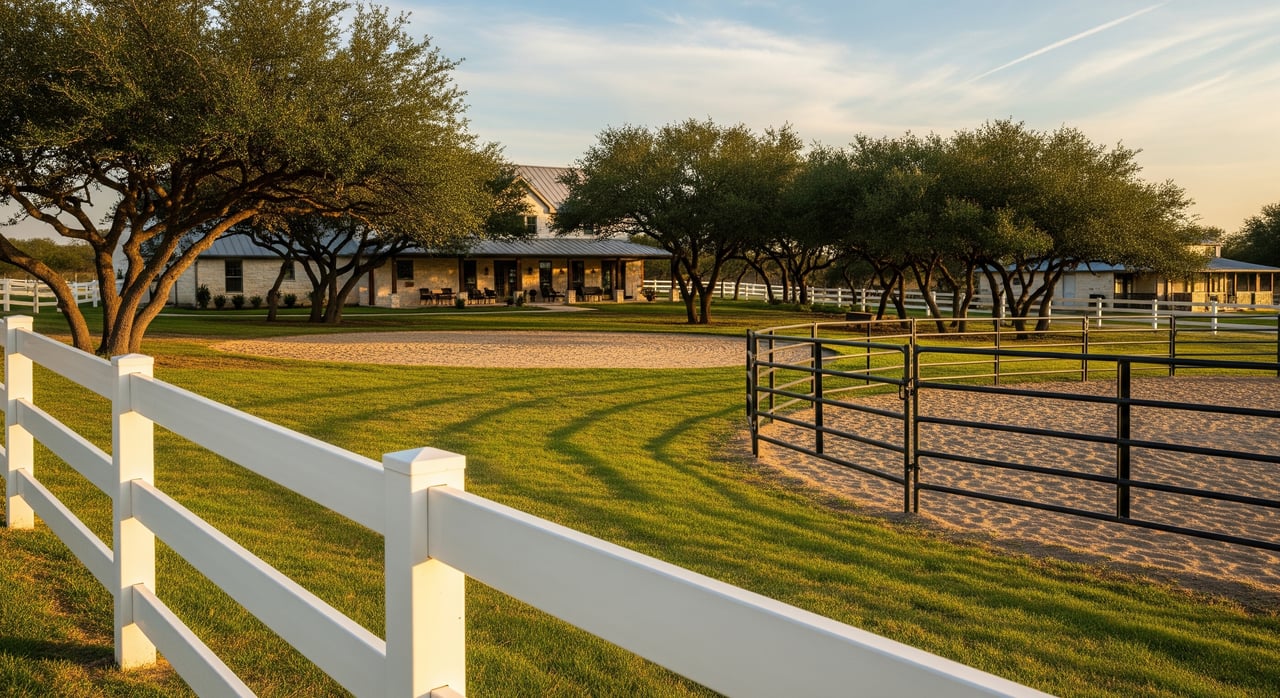
Combination fences balance visibility, containment, and cost. A common setup is a top board or pipe rail for visibility with no-climb wire beneath for containment. Another option is a pipe or board fence with a hot strand at the top to discourage leaning. Verify that all components work together and that the electric is live.
Safety design essentials
Visibility first
Horses need to see fences clearly to avoid collisions. A visible top rail or a bright tape at the top helps. Contrasting colors can improve detection at a distance. Avoid thin, hard-to-see wire as a primary visual.
Height and spacing
Set the top rail or strand around 54 to 60 inches for adult horses. Adjust higher for stallions or jumpers as needed. Keep gaps under the fence small to deter foals from rolling under or hooves from getting caught. For mesh, secure the bottom so it does not curl up.
Gates and lanes
Plan for trailers and equipment. A good rule is 12 to 14 feet wide for main gates on acreage. Use positive stops and keep hardware flush so nothing snags clothing or tack. Place gates where footing is solid and water does not pool.
Cross-fencing layout
Avoid placing low-visibility lines in high-speed approaches or training lanes. Provide enough space and escape routes so horses are not funneled into tight corners. Keep electric tape visible and away from areas where a spooked horse might run through without recognizing the barrier.
What to check on property tours
- Structural condition: Are rails straight and intact with no large splits, exposed nails, or sharp edges? Are posts plumb and solid, not rotting or loose?
- Wire integrity: Is no-climb mesh tight with minimal sag? Check for rust, broken strands, or loose staples.
- Visibility and hazards: Is there a clear top rail or visible tape? Look for protruding hardware and gaps where hooves could get trapped.
- Gates: Are openings wide enough for trailers or tractors, typically 12 to 14 feet? Do latches work securely?
- Site conditions: Is drainage adequate along fence lines? Are corners braced and free from erosion? Any signs of wildlife pressure such as hog rooting or pushed-in sections?
- Paperwork: Ask when the fence was installed or last repaired, what materials were used, and whether any warranties exist. Confirm easements, shared fences, or HOA covenants.
Cost, lifespan, and maintenance
Think in terms of initial cost, expected life, and your time. Electric tape or temporary systems cost less up front but need regular attention. No-climb with a top rail and standard board fences sit in the mid-range, trading some maintenance for visibility and safety. Pipe and high-quality vinyl tend to cost more initially but can reduce long-term upkeep.
- Longevity snapshots: steel or pipe can last for decades with rust control. No-climb wire with good posts runs 10 to 30 or more years. Board fences often last 10 to 20 years with regular staining or painting. Vinyl commonly ranges 10 to 25 years depending on UV protection and impacts. Electric tape or rope components have shorter service lives, while energizers and posts last longer.
- Maintenance rhythm: plan annual walk-throughs to fix breaks, re-tension mesh, and clear vegetation from electric lines. Wood needs periodic sealing. Metal benefits from rust treatment and repainting as needed.
Recommendations for Pilot Point buyers
- Prioritize a visible top rail for safety. A board or pipe top rail with no-climb beneath is a strong all-around choice.
- Be cautious with cable-only turnout areas. Consider upgrades if you see them on tour.
- For small acreage or starter setups, no-climb with a top rail or with a hot tape at the top balances cost, safety, and containment.
- For low maintenance over time, pipe or high-quality vinyl can be worth the upfront investment.
- Always verify gate widths and access for trailers before you commit.
- Document fence condition in your inspection contingency, and request seller records or warranties for recent installs.
Quick buyer checklist
- Confirm deed restrictions, HOA rules, and any permit needs.
- Measure top rail height. Aim for about 54 to 60 inches for adult horses.
- Scan for hazards: sharp edges, broken boards, sagging wire, wide gaps.
- Check main gate widths. Target 12 to 14 feet for trailers and equipment.
- Inspect posts for rot, undermining, and plumb alignment.
- Ask for maintenance history, material specs, and any warranties.
- Get at least two local contractor bids if replacements or upgrades are likely.
Ready to find the right fence fit?
Choosing fencing in Pilot Point is about matching safety and visibility with our local climate, soils, and your budget. If you want a practical read on a property’s current fence and a plan for upgrades, work with a local agent who understands equine setups and construction details. For tailored guidance and a property search focused on usable acreage, barns, and fencing, connect with Lauren McCambridge.
FAQs
What is the best horse fence for Pilot Point weather?
- A combination fence with a visible top rail (board or pipe) and no-climb mesh beneath offers strong visibility, containment, and durability in sun, storms, and wind.
How tall should a horse fence be in North Texas?
- Set the top rail or top strand around 54 to 60 inches for adult horses, and consider higher for stallions or jumpers.
Are electric-only fences enough for turnout in Pilot Point?
- Treat electric as a supplement to a physical barrier; use visible tape or rope and keep vegetation off the lines so the charge stays reliable.
What gate width works for trailers and tractors?
- Plan for 12 to 14 feet for main gates on acreage to accommodate horse trailers and equipment safely.
How do clay soils in Denton County affect fences?
- Expansive clays can shift posts and stress rails; proper post depth, bracing, and drainage reduce movement and extend fence life.
Do I need approvals before replacing or installing fencing?
- Confirm deed restrictions, HOA or municipal rules, and any county permitting before starting work; when in doubt, check with Denton County and the local Extension office.