Wondering why one 20-acre property near Collinsville feels ready to use while another 20-acre tract seems full of limits? That question comes up often with rural land, especially when you are comparing homesites, pasture, recreation ground, or future plans for a split. If you are buying or selling acreage in ZIP code 76233, understanding usable acreage can help you look past the headline acre count and focus on how the land actually functions. Let’s dive in.
What Usable Acreage Means
Usable acreage is not a formal legal land category. In practical terms, it is the part of a property that fits your intended use, whether that is building a home, grazing horses or cattle, creating a recreation setup, or holding land for a future division.
That distinction matters because deeded acreage, appraisal-district acreage, and functional acreage are not always the same thing. Grayson CAD notes that its acreage amounts are for appraisal-district use only and should be verified before being used for legal purposes or documents. If you need to confirm boundaries or legal access, county clerk records, plats, and a land survey matter far more than a listing shortcut.
Why Usable Acreage Matters in Collinsville
In the Collinsville area, smaller rural tracts and ranchettes often attract a broad range of buyers. Texas A&M rural-land research notes that small tracts typically bring higher per-acre prices because they appeal to more buyers, which makes the quality and function of each acre especially important.
That means two properties with the same acre count can offer very different value. One may have open ground, solid access, and room for septic and improvements, while another may lose a meaningful portion of its practical use to floodplain, easements, brush, or limited utility options.
Start With the Right Records
Before you decide how much land is truly usable, start with the official record. The Grayson County Clerk keeps deeds and plats, and the county notes that a plat should be filed each time a legal boundary changes.
That is important because online acreage figures are only a first step. A plat shows legal descriptions and boundaries, while a survey is the tool used to evaluate boundaries, rights-of-way, and easements. If access, improvements, or buildable area matter to you, a survey is one of the most important parts of your due diligence.
Access Can Change Everything
Road Frontage vs Easement Access
A tract may be fully deeded but still feel constrained if access is narrow, shared, or dependent on an easement. Texas A&M explains that an easement gives another party the right to use land for a specific purpose, but it does not transfer ownership.
In Grayson County, buyers using an access easement instead of road frontage for an E911 address must present recorded documentation for review. So if a property reaches the road only through an easement, that detail deserves close attention early in the process.
Why Access Affects Practical Use
Access is about more than simply getting onto the land. You also need to consider whether equipment, trailers, construction vehicles, or livestock needs can move in and out efficiently.
A long, narrow entry or heavily restricted easement can reduce how flexible the tract feels in daily use. For buyers looking at equestrian, farm, or ranch-style properties, that practical side of access matters just as much as the acreage total.
Floodplain and Drainage Matter
Floodplain Acres Still Count on Paper
Floodplain land still counts in the deeded acreage, but it may not be equally usable for improvements. FEMA defines a Special Flood Hazard Area as land inundated by the base flood, also known as the 1-percent annual chance flood.
Grayson County requires the 100-year floodplain to be shown on plats. The county also states that a Floodplain Development Permit is required for construction in the floodplain, and development with Special Flood Hazard Area encroachment requires both a permit and elevation certificate.
Check the Layout, Not Just the Map
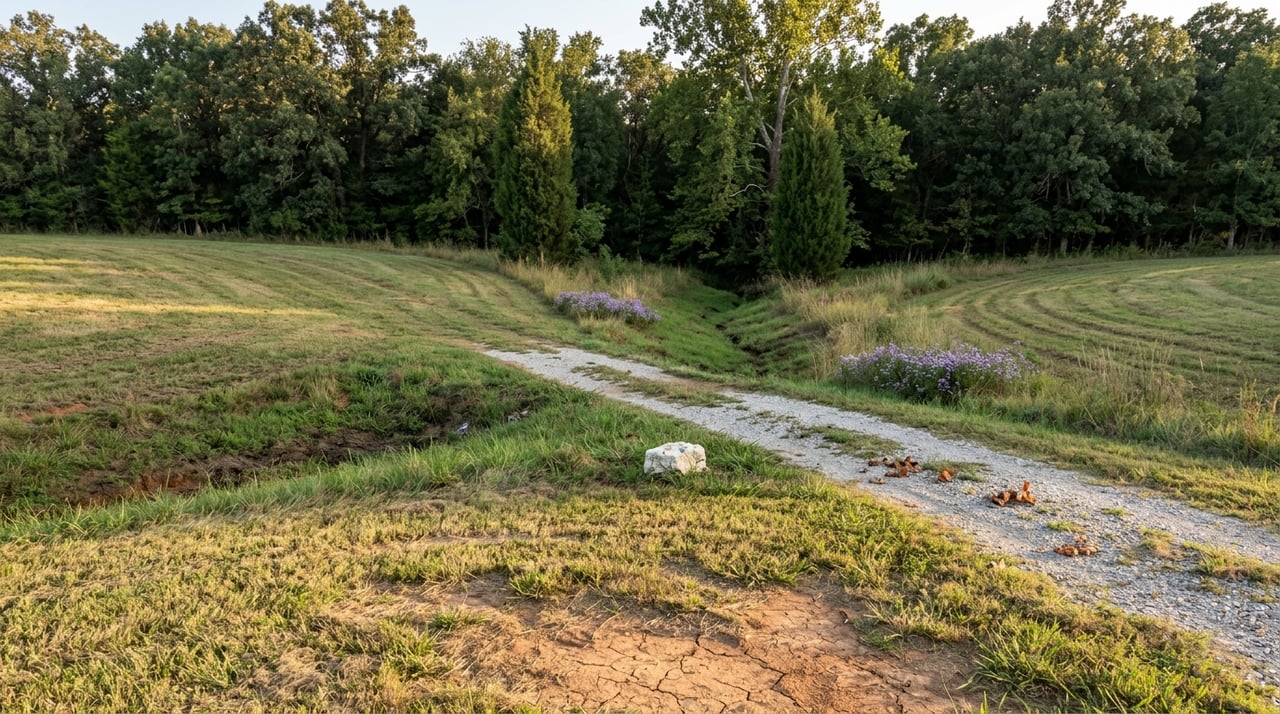
A property does not need to be entirely in floodplain for drainage to affect usability. Sometimes the issue is where the floodplain sits on the tract. If it cuts through the best homesite, blocks access to open pasture, or limits where a barn or shop can go, the effect can be much larger than the map first suggests.
Grayson County GIS includes floodplain layers, which makes it a useful first-pass screening tool. It can help you spot possible concerns before you ever schedule a site visit.
Septic and Utilities Shape Buildable Area
In unincorporated Grayson County, a permit is required for new or replacement on-site sewage facilities. That means septic planning is a real factor in how much of a rural tract is practical for a home and other improvements.
County GIS layers can also help you review wells, water lines, sewer lines, electricity service areas, and oil and gas pipelines. A tract may look straightforward online, but if utility reach is limited or if pipeline easements affect placement, the area that works well for a house, barn, or shop may be smaller than expected.
Soils, Terrain, and Vegetation Affect Function
Open Pasture and Brushy Ground Serve Different Uses
Not every usable acre has to be open and manicured. USDA guidance shows that land with more limited soils is often better suited to pasture, forestland, wildlife habitat, or recreation than to intensive cultivation.
That is why wooded or brushy acreage is not automatically wasted acreage. It may still serve your goals well if you want privacy, habitat value, grazing in certain areas, or a recreational setup.
Land Quality Can Affect Value
USDA farmland-value data shows that cropland generally commands a premium over pastureland because of higher per-acre returns. In simple terms, land quality and productivity influence value.
So when two Collinsville-area tracts carry different asking prices, the difference may come from more than just location or improvements. Terrain, soil capability, open usable ground, and drainage can all play a role.
Local Rules Still Matter
Many rural buyers assume that no zoning means no restrictions. In unincorporated Grayson County, there is no zoning outside the Lake Ray Roberts Zoning District and the North Texas Regional Airport Zoning Regulation, but that does not mean every property is free of development-related requirements.
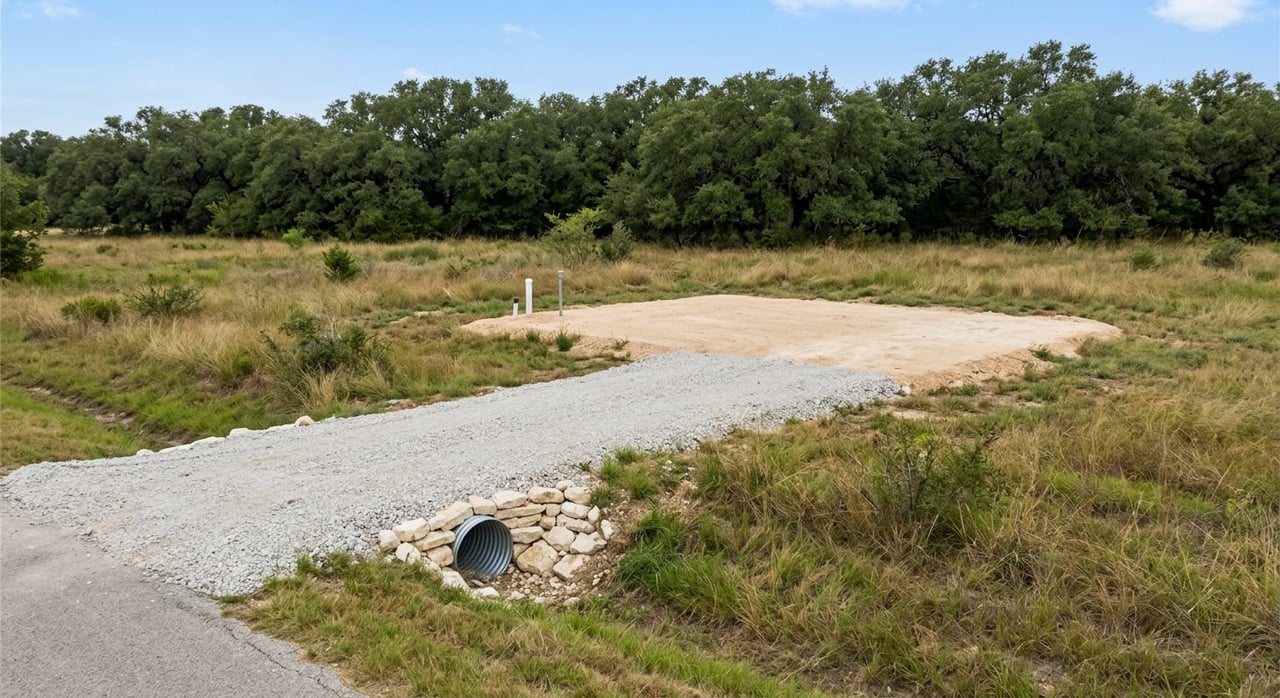
The county states that subdivision of property must follow subdivision regulations. It also requires a Development Certificate for new E911 addresses, new culvert installations, and floodplain determinations.
If part of your plan is to divide a tract later, add a second homesite, or change access, those county requirements can affect how usable the land is for your future goals. This is one reason buyers should match the property to the actual plan, not just the current appearance.
A Simple Way to Evaluate Usable Acreage
If you are comparing rural properties around Collinsville, this step-by-step approach can help you make a more informed call:
- Compare the deeded acreage to the CAD record.
- Review county clerk deeds and plats.
- Check Grayson County GIS layers for floodplain, roads, utilities, wells, and pipelines.
- Confirm whether access is direct road frontage or easement-based.
- Ask how the land will handle your intended use, such as a homesite, grazing, recreation, or future split.
- Walk the tract and look at the on-the-ground layout.
- Use a survey when boundaries, access, or improvements matter.
That process helps you move from paper acreage to practical acreage. It also helps you avoid overpaying for land that does not fit your goals as well as it first appears.
What Sellers Should Know
If you are selling a rural property in 76233, buyers are likely to ask detailed questions about access, floodplain, utilities, and how the land lays out in real life. The more clearly you can show the property’s practical strengths, the easier it is for buyers to understand the value.
That may mean having recorded access information available, knowing whether there is a current survey, and understanding where the best homesite or pasture sits on the tract. For acreage properties, good marketing is not just about the total acre count. It is about explaining how the land works.
Why Local Guidance Helps
Usable acreage is where rural real estate gets very specific, very fast. Maps, recorded documents, terrain, utility reach, and improvement placement all work together, and small details can change the way a property fits your plans.
That is where local experience matters. When you work with someone who understands acreage, ranch-style properties, and the practical side of rural land, you can ask better questions and make clearer decisions from the start.
If you are buying or selling rural property near Collinsville and want help evaluating how the land actually functions, reach out to Lauren McCambridge for practical, local guidance tailored to your goals.
FAQs
What does usable acreage mean on Collinsville rural properties?
- Usable acreage is the portion of a property that works for your intended purpose, such as a homesite, pasture, recreation, or a future split, rather than just the total deeded acre count.
Are Grayson CAD acreage figures enough to confirm land size?
- No. Grayson CAD states its acreage figures are for appraisal-district use only, so buyers and sellers should verify key details through deeds, plats, and a survey when needed.
Can floodplain reduce usable acreage on Grayson County land?
- Yes. Floodplain acres still count on paper, but they may be less practical for building or other improvements, especially if permits or elevation requirements apply.
Does easement access affect usable acreage near Collinsville, TX?
- Yes. Easement access does not change ownership, but it can reduce flexibility if access is narrow, shared, or limited by recorded terms.
Is wooded acreage considered usable on rural Texas property?
- Yes. Wooded or brushy ground can still be useful for grazing, habitat, recreation, or privacy, even if it is less suited for a homesite or intensive agricultural use.
Why can two 20-acre Collinsville-area tracts have different values?
- Price differences often come down to practical factors like access, utilities, floodplain, terrain, soils, and how much of the land is functional for the buyer’s intended use.