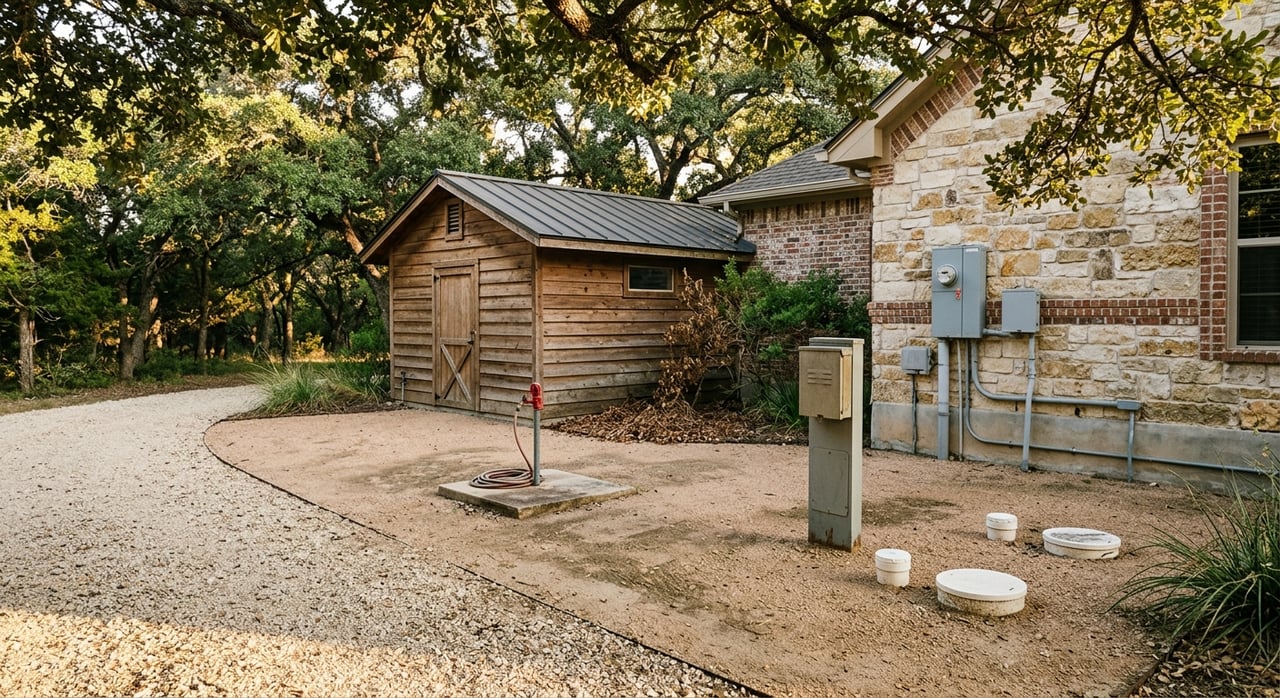
If you are looking at acreage around Collinsville, one question matters more than it seems: what does “improved” actually mean? A tract can look ready to use at first glance, but the real value often comes down to legal access, septic approval, utility readiness, and whether key features were added through the right permit path. If you want to buy or sell land in the 76233 area with fewer surprises, it helps to understand which improvements truly move the needle. Let’s dive in.
What land improvements mean on Collinsville acreage
On Collinsville-area acreage, improvements are the features that make land more usable and reduce the setup work a future owner still needs to do. That can include a driveway, culvert, septic system, fencing, gates, cattle guards, barns, shops, sheds, or garages.
Not every improvement carries the same weight. In practical terms, the most valuable ones are usually the ones that remove friction first, like getting onto the property legally, supporting future utility use, or making the tract functional for storage, livestock, or day-to-day access.
Start with jurisdiction first
Before you judge any improvement, you need to know who regulates the property. Around Collinsville, that often means figuring out whether the tract is inside city limits, inside the city’s ETJ, or in unincorporated Grayson County.
Collinsville city limits
Inside Collinsville city limits, permits are required before many common projects. The city’s permit materials list items such as fences, driveways, storage sheds, detached garages, and accessory buildings as permit-triggering work.
Minor fence repair is exempt, but fence installation or replacement is not. The city also requires a certificate of occupancy before utilities are turned on for a new occupancy or remodeled structure.
Collinsville ETJ
If the property is in Collinsville’s ETJ, subdivision rules can still affect timing and access to improvements. For newly platted development, the city ties building permits and occupancy to completed public improvements and recorded plats.
That means a property can be outside city limits but still affected by city-related development rules. For buyers and sellers, this is why “county land” is not always the full story.
Unincorporated Grayson County
In unincorporated Grayson County, the county governs important right-of-way work and septic-related processes. Permits are required before work on driveways, culverts, utility lines, and other county right-of-way changes.
The county states that permit work must begin within six months and finish within nine months. For septic systems, the permitting process also requires a current 911 address and property ID number, and Grayson County notes that the process often takes five to seven days.
Why access is one of the biggest upgrades
Acreage is much easier to use, show, finance, and enjoy when access is already in place. That is why driveways and culverts are often some of the most meaningful land improvements on a Collinsville tract.
Driveways and culverts
In unincorporated Grayson County, new driveways, widened driveways, driveway repairs, culvert placement, and utility work in the county right-of-way all require approval and inspection. The county also sets the culvert size, even though it does not install the culvert for the owner.
This matters because an entrance is not just a convenience feature. It is part of the legal and physical usability of the land.
If a driveway or culvert is built without the required permit, Grayson County can seek an injunction or require removal or repair at the landowner’s expense. For a buyer, that can turn what looks like a finished entrance into a cleanup project.
State highway frontage changes the process
If the tract fronts a state highway, access may involve TxDOT rather than just local approval. TxDOT states that access driveway permits are issued to owners of property that abuts state highways.
That is an important detail for any property being marketed as ready for immediate use. If state-highway access has not been cleared through the right path, you do not want to assume a future entrance is automatic.
Utilities and septic often decide usability
When people ask whether land is improved, they often focus on visible features first. In reality, utility feasibility and septic status often have a bigger impact on how quickly you can use the property.
Septic approval matters more than proximity
A utility line nearby does not always mean a tract is ready to build on. Septic is a separate issue, and in many rural settings it is one of the biggest schedule and budget items.
The Texas Commission on Environmental Quality requires a permit and approved plan to construct, alter, repair, extend, or operate an on-site sewage facility. Grayson County’s OSSF office also requires a current 911 address and property ID before it will accept an application.
Utility turn-on can depend on occupancy status
Inside Collinsville city limits, utility service for a new occupancy cannot be turned on until a certificate of occupancy is issued. That is easy to overlook when a structure appears complete from the outside.
For buyers, that means a building alone does not always equal immediate utility service. For sellers, it is a reminder that completed work and usable work are not always the same thing.
Timeline bottlenecks are real
On rural land, access and septic approvals can drive the timeline more than buyers expect. County and city approvals, inspections, and contractor schedules can all add time.
Collinsville’s permit materials also note that incomplete submittals may be rejected or delayed. If a project involves an accessory building or another improvement that needs a site plan or engineered details, paperwork quality matters.
Fencing, gates, and cattle guards
For farm, ranch, and lifestyle acreage, fencing and access features do a lot of heavy lifting. They help define use, support livestock management, and affect how finished a property feels to the next owner.
Fencing adds practical value
Fencing is not just cosmetic on rural property. TxDOT’s appraisal guidance states that fencing on a rural property is normally part of the land value, which shows how closely it is tied to the tract’s function.
Inside Collinsville city limits, fence installation or replacement is also treated as a permit item. The city asks for fence location, gate locations, height, and material type on the site plan.
Gates must respect access rules
A gate can be useful, but placement still has to follow access rules. Grayson County states that roadway areas dedicated to the public cannot be obstructed by a gate or fence.
Collinsville’s subdivision rules also require private streets to preserve emergency and utility access. If access fails, the city can remove gate devices at the association’s expense.
Cattle guards are a true rural improvement
Cattle guards are a specialized access feature, not a decorative add-on. TxDOT defines a cattle guard as a structure that allows vehicles to pass while preventing livestock from crossing.
TxDOT also notes that permits can be issued for cattle guards, but they may be relocated or removed if requested. Maintenance is generally the property owner’s responsibility unless a different arrangement is stated in the conveyance.
Barns, shops, and accessory buildings
A barn or shop can make acreage feel much more usable from day one. For many buyers, these buildings reduce startup costs and support the way the land will actually be used.
Why these structures matter
Basic barns, sheds, garages, shops, corrals, and similar structures can improve a tract because they make the property more functional right away. That benefit is often more important than the simple amount of square footage under roof.
For example, a shop may help with equipment storage, while a barn or shed may make day-to-day rural use easier. The real impact depends on condition, usefulness, and whether the structure fits the land’s intended use.
Permits still matter
Inside Collinsville city limits, accessory buildings are a permit item. The city requires details such as site plans, setbacks, valuation, square footage, and description of use.
That means a building may look like a value add, but buyers and sellers should still verify whether it was installed through the correct process. Unpermitted work can become expensive to fix later.
How improvements affect value
An improved tract is not automatically worth more in every way, but the right improvements can make land easier to use and easier to compare with competing properties. The biggest value tends to come from improvements that remove uncertainty.
That includes:
- A usable, legal entrance
- Approved septic status
- Clear utility feasibility
- Functional fencing
- A permitted barn, shop, or storage building
Texas property tax guidance also distinguishes new improvements from ordinary maintenance. In other words, maintaining a driveway or repairing a fence is not the same thing as adding a new improvement.
For sellers, this matters when describing a tract. For buyers, it helps you separate true upgrades from normal upkeep.
A smart checklist for buyers and sellers
Before a Collinsville-area property is marketed or purchased as improved acreage, it helps to verify the basics first. This can save time, support cleaner negotiations, and reduce the risk of surprises during due diligence.
Four items to confirm
- Legal access
- Septic status
- Utility feasibility
- Permit path for barns, shops, fences, gates, or other major improvements
If the tract fronts a state highway, add the driveway permit path to the list. If the land is inside Collinsville or its ETJ, confirm whether city permitting or subdivision rules affect the existing improvements.
Why this matters in Collinsville
In the Collinsville area, the best land improvements are usually the ones that make a property easier to use right now. A good drive, legal septic, dependable fencing, and a permitted structure can take a tract from raw land to practical acreage much faster than surface-level features alone.
That is especially important if you are comparing properties that may look similar online. One tract may appear finished, while another may actually be further along in terms of approvals, usability, and fewer loose ends.
When you are buying or selling acreage, details like these are where local knowledge really counts. With a rural property, the right questions about access, structures, and permit history can tell you much more than a listing photo ever will.
If you want practical guidance on Collinsville-area acreage, permitted improvements, and what really adds value, Lauren McCambridge brings a hands-on understanding of land, rural structures, and North Texas property decisions.
FAQs
What counts as a land improvement on Collinsville acreage?
- On Collinsville-area acreage, land improvements can include driveways, culverts, septic systems, fencing, gates, cattle guards, barns, shops, sheds, garages, and other features that make the property more usable.
Do Collinsville city properties require permits for fences and accessory buildings?
- Yes. Inside Collinsville city limits, permits are required for many common projects, including fence installation or replacement, driveways, storage sheds, detached garages, and accessory buildings.
Does Grayson County require permits for rural driveways and culverts?
- Yes. In unincorporated Grayson County, permits and inspections are required for new driveways, widened driveways, driveway repairs, culvert placement, and certain utility work in the county right-of-way.
Why is septic important when buying Collinsville acreage?
- Septic status is a major part of land usability. TCEQ requires a permit and approved plan for on-site sewage facilities, and Grayson County requires a current 911 address and property ID before it will accept an application.
Can a gate be installed anywhere on acreage near Collinsville?
- No. Grayson County states that public roadway areas cannot be obstructed by a gate or fence, and Collinsville’s subdivision rules require private streets to maintain emergency and utility access.
Do barns and shops add value to acreage in Collinsville?
- They can, especially when they reduce startup work and make the property more functional. Their effect depends on condition, usefulness, and whether the structures were added under the correct permit path.